
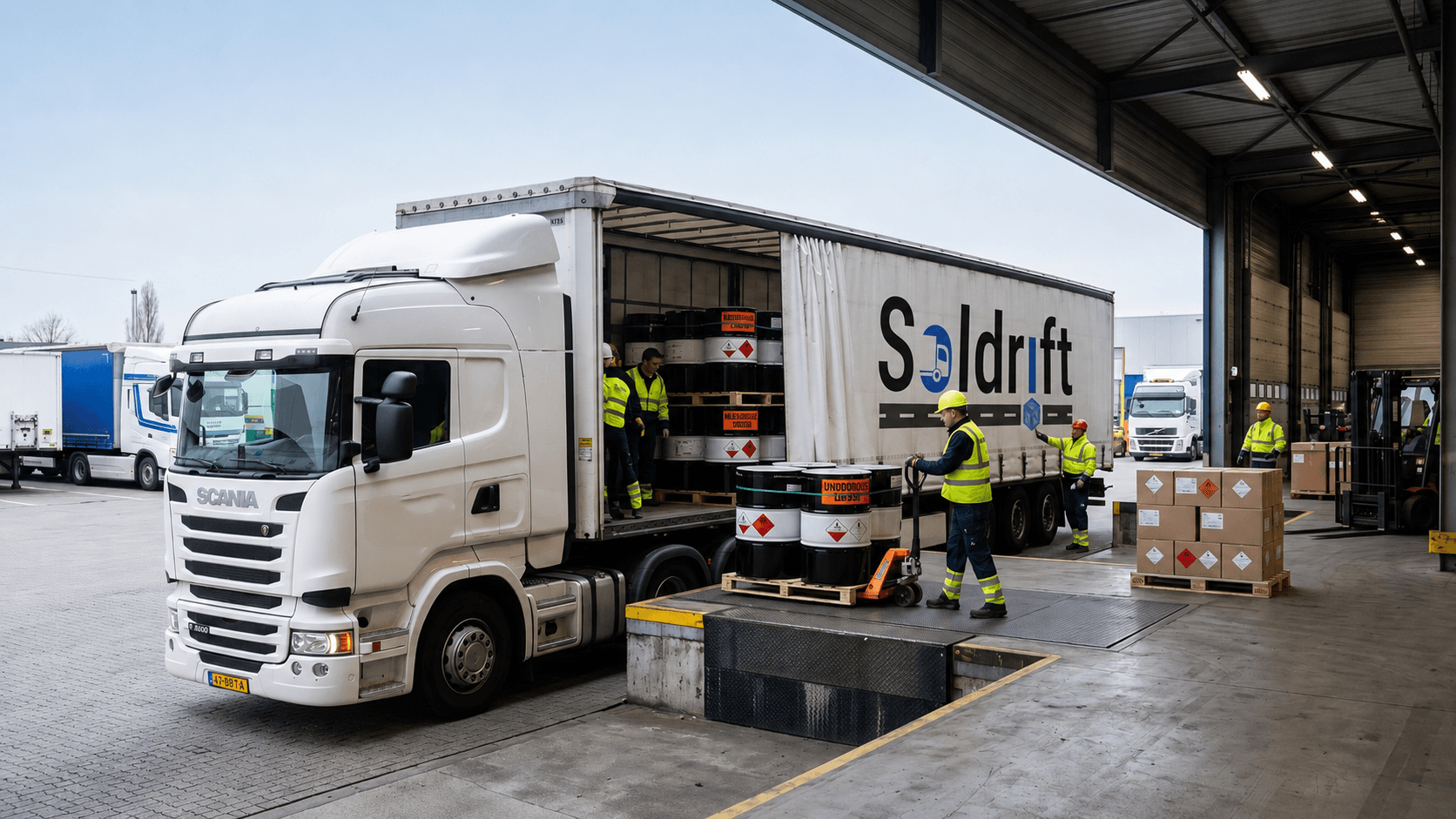
Dangerous Goods
Soldrift’s Dangerous Goods Transport Services in Australia
Move dangerous goods across Australia with our safe and cost-efficient dangerous goods services.
As a reliable transport service provider in Australia, we understand that transporting dangerous goods requires the highest level of care and expertise. That's why we're here to ensure the secure and compliant movement of hazardous materials across the country.
Dangerous goods include many substances and articles that pose risks to public safety, property, or the environment due to their explosive, flammable, toxic, infectious, or corrosive properties.
To meet the unique challenges of transporting these materials, we adhere to the
Australian Dangerous Goods Code (ADG Code).
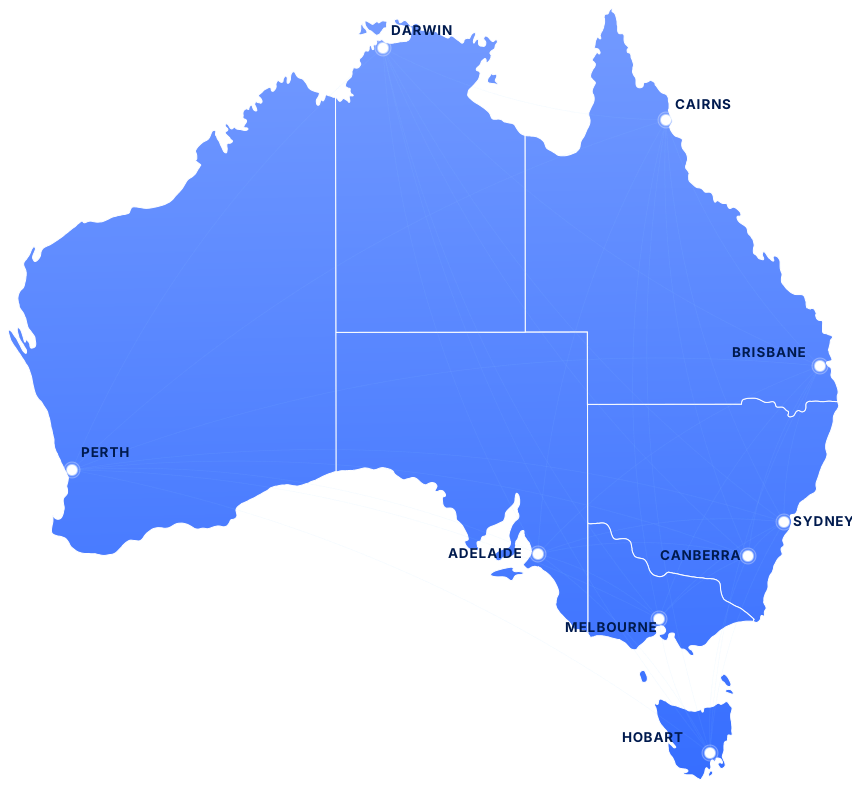
Dangerous Goods Delivered Across All Major Cities Of Australia
Types Of Dangerous Goods Services We Offer

Classification
We understand that not all dangerous goods are the same. Our experts classify these materials based on their properties, ensuring proper handling and safety measures are in place.

Packaging & Segregation
We utilize the latest packaging technologies to ensure your dangerous goods are secure during transit, and proper segregation and stowage prevent incompatible substances from coming into contact during transit.

Marking And Placarding
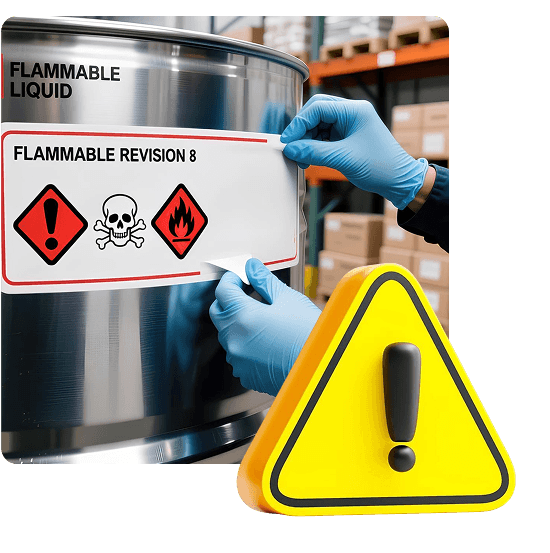
We adhere to strict regulations for marking and placarding, ensuring clear identification of dangerous goods for safety and compliance.

Specialized Fleet & Equipment
Our fleet is equipped with vehicles designed to meet the unique requirements of transporting hazardous materials. Drivers are trained to respond effectively to emergencies during transport.

Documentation
We handle all documentation and paperwork, ensuring compliance with regulatory requirements and making your transport process seamless.
From Packaging To Documentation: Your Dangerous Goods
Transported Safely
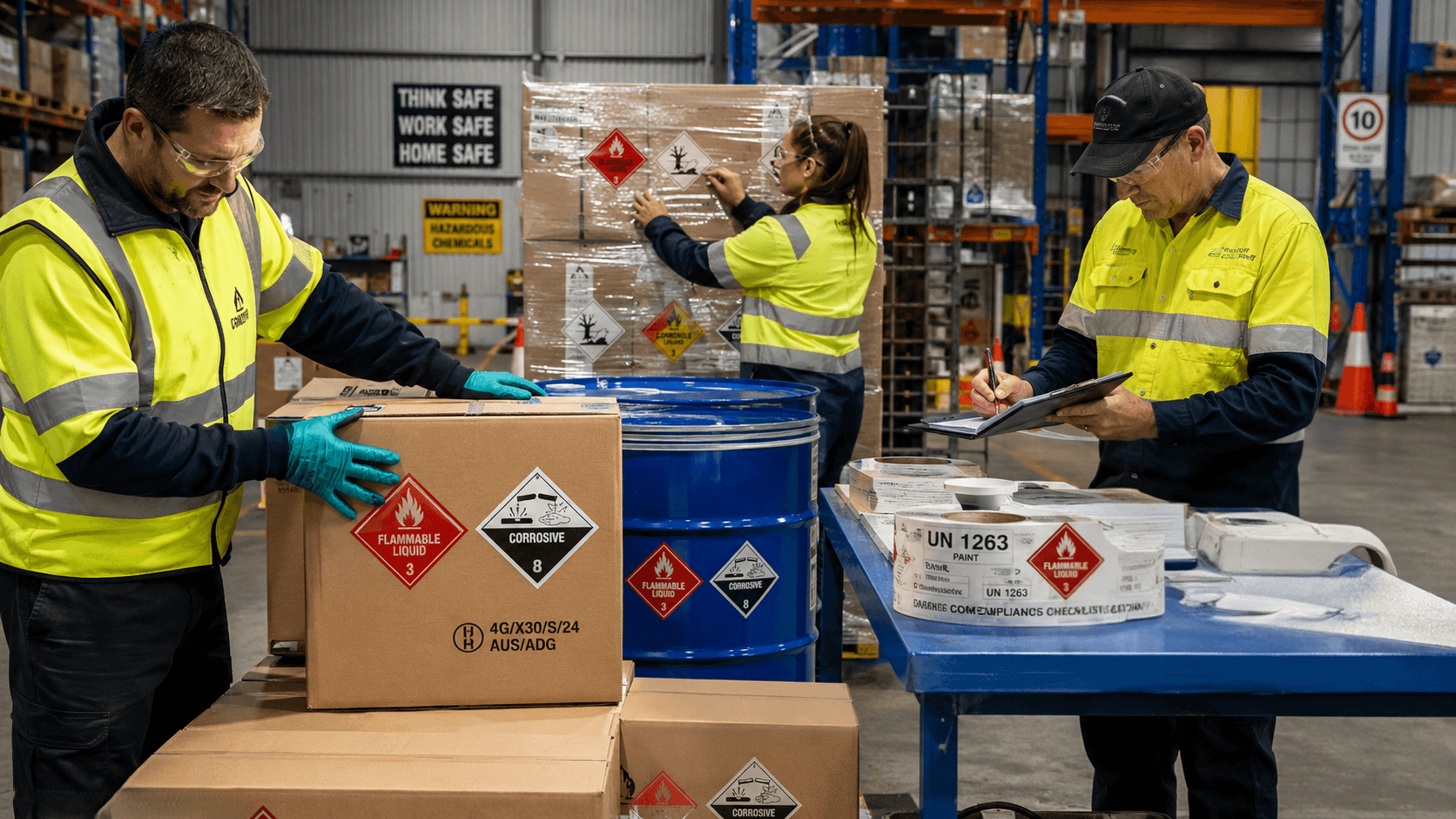
We transport a wide variety of dangerous goods, which are categorized into nine classes, each with its own divisions. Our team understands the specific handling requirements for each class and division, ensuring your cargo reaches its destination safely. From bulk containers to IBCs and freight containers, we have the equipment needed for your cargo. In the rare event of an emergency, our team is trained to follow precise procedures to mitigate risks and protect the environment and public safety.
Dangerous Goods Classification
We transport a wide variety of dangerous goods, which are categorized into nine classes, each with its own divisions. Our team understands the specific handling requirements for each class and division, ensuring your cargo reaches its destination safely
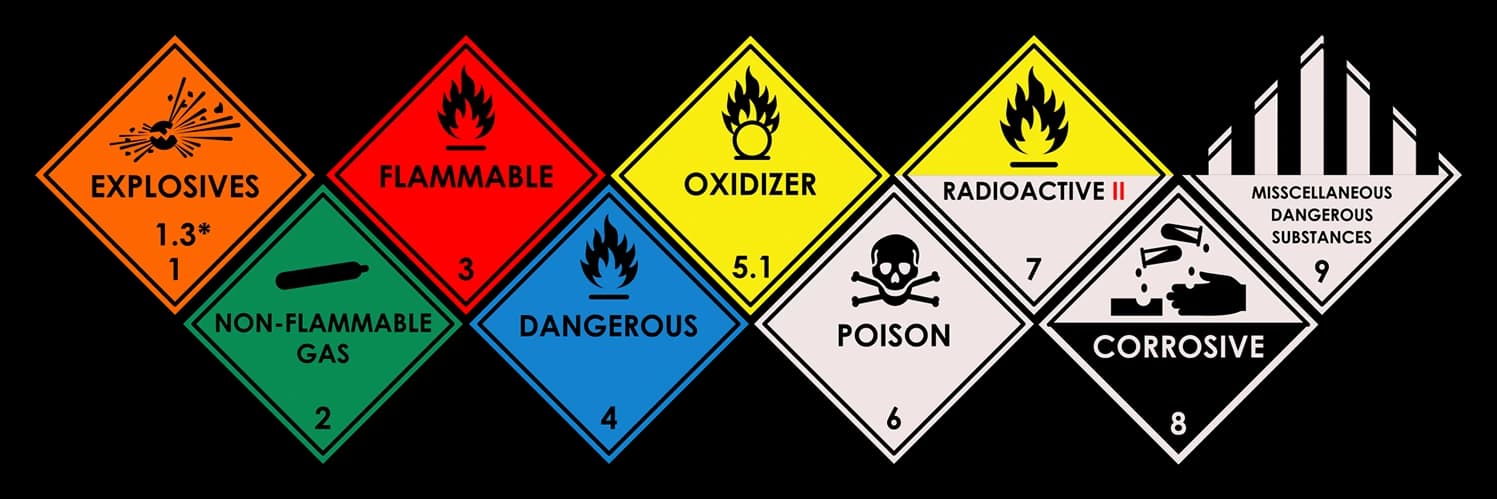
UN Number: Dangerous Goods Classification by the UN
The United Nations established global guidelines to guarantee universal safety measures and supply a structure that domestic regulatory entities can adapt. Rules pertaining to the transportation of hazardous materials in Australia are detailed in theAustralian Dangerous Goods (ADG) Code
Every category of dangerous goods is given a distinctive number, recognized as its UN Number; for instance, corrosive liquid holds the UN 1760 number.
The United Nations devised a four-digit coding system for the swift recognition of hazardous goods.
Here's How To Identify The UN Number
For Example, the category is: Waste Chemicals:
- Begin by classifying or describing your waste chemicals.
- Refer to the Australian Dangerous Goods Code edition 7.9 available at
https://www.ntc.gov.au/codes-and-guidelines/australian-dangerous-goods-code - Navigate to Table 3.2.3 within the code.
- Look for the relevant name and description in column 2 that aligns with your classification from step 1. a. In case your chemical is a pure substance and not a mixture, it will have a specific UN number, like Acetone for example. b. If it's a compound, you need to determine its generic description. Typically, the description ends with N.O.S. (not otherwise specified).
- The UN number can be found in column 1 of the table.
For instance
- Should your discarded container hold methanol and benzene, this receptacle is deemed a flammable substance and a hazardous concoction.
- Refer to the 7.9 edition of the Australian Dangerous Goods Code
Chain Of Responsibility (CoR) For Dangerous Goods
Soldrift prioritizes safety and strict adherence to the Heavy Vehicle National Law (HVNL) and Australian Dangerous Goods Code regulations. The Chain of Responsibility (CoR) is a shared commitment by all stakeholders involved in the transport of dangerous goods. Apart from the driver, everyone in the supply chain plays a crucial part, including the people who send, pack, load, carry, and receive dangerous goods.
Under CoR, each party holds a separate responsibility that reduces risks and helps in swift and safe dangerous goods shipments. Together, we cover classification, packaging, labelling, loading, and documentation. At Soldrift, CoR is core to how we operate together to keep dangerous goods transport smooth across Australia
Our SOPs and best practices ensure minimum damage and least chances of accidents during transit of dangerous goods.
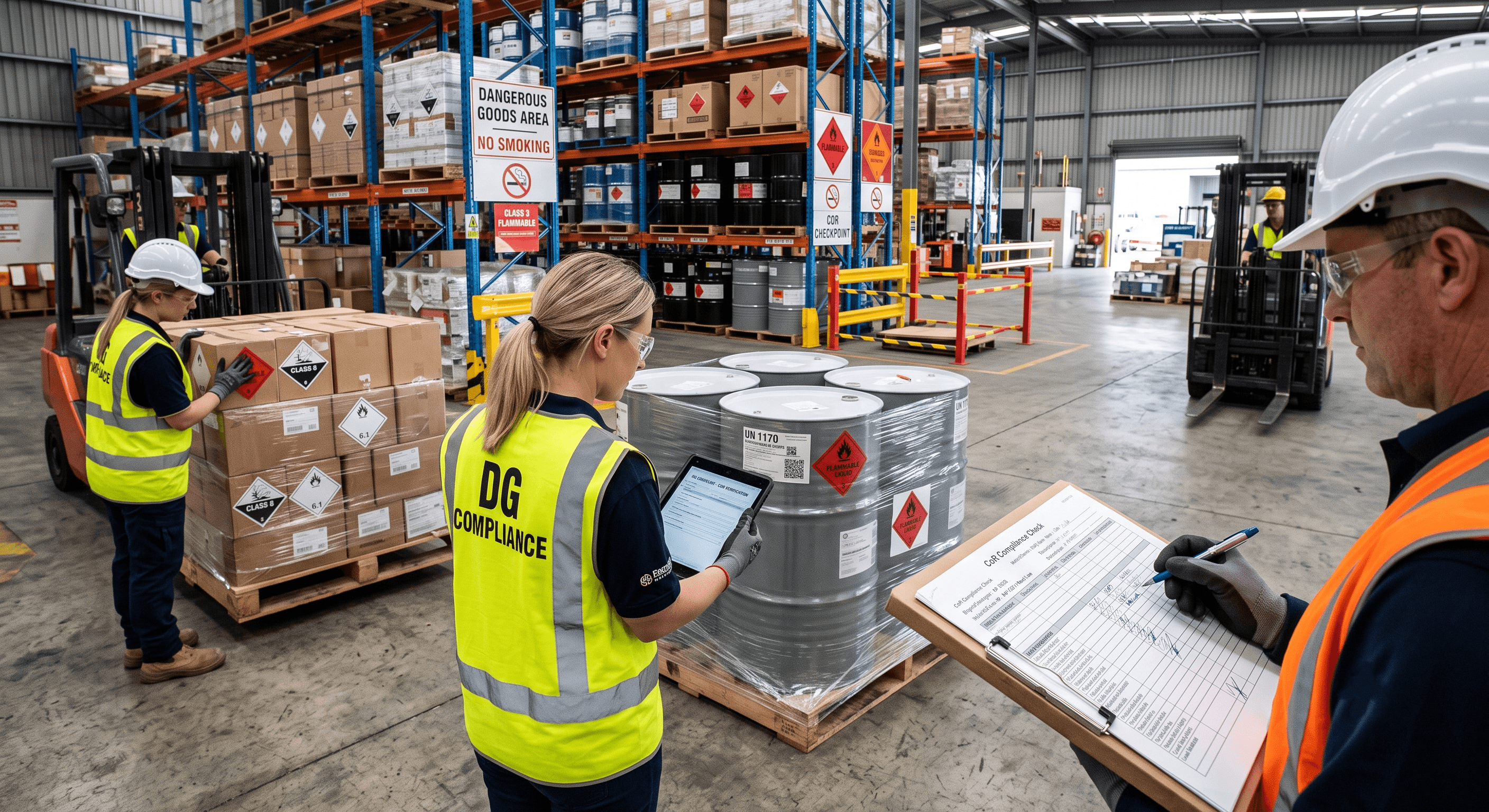
Key Responsibilities of Each Party

Consignor / Shipper
Primary responsibility for a safe start
- Provide the proper document
- Classify goods correctly by class and UN number
- Provide details of packaging group
- Share load details with packers and loaders

Packer
Ensuring protected packaging & labeling
- Use ADG-compliant packaging for each class
- Use quality packaging material as specified
- Segregate incompatible substances correctly
- Apply correct labels and markings
- Check the package for any defects before dispatch

Loader
Getting the load safely and at the right place into the truck
- Safely load into trucks without misplacement
- Maintain correct segregation while loading
- Match placards to the actual cargo
- Follow the correct stowage sequence
- Confirm weight limits before loading
- Avoid overloading vehicles or containers

Operator / Carrier
Responsible for safe transit and route planning.
- Use vehicles fit for dangerous goods
- Assign trained, licensed drivers
- Maintain accurate documentation for on-route compliance
- Plan proper routes safe for dangerous goods
- Keep an emergency response plan ready

Driver
Responsible for on-road compliance & best practices.
- Should hold a valid dangerous goods driver's licence
- Carry required placards and documents
- Follow fatigue management rules
- Inspect the load before departure
- Respond swiftly during emergencies
- Keep the emergency number handy on the placards

Consignee / Receiver
Responsible for safe unloading assistance & checks
- Provide a safe unloading area
- Verify goods match transport documents
- Provide safe access to the vehicle for unloading
- Report damage or discrepancies immediately
- Follow safe handling once the goods arrive
What We Have
Excellence Work
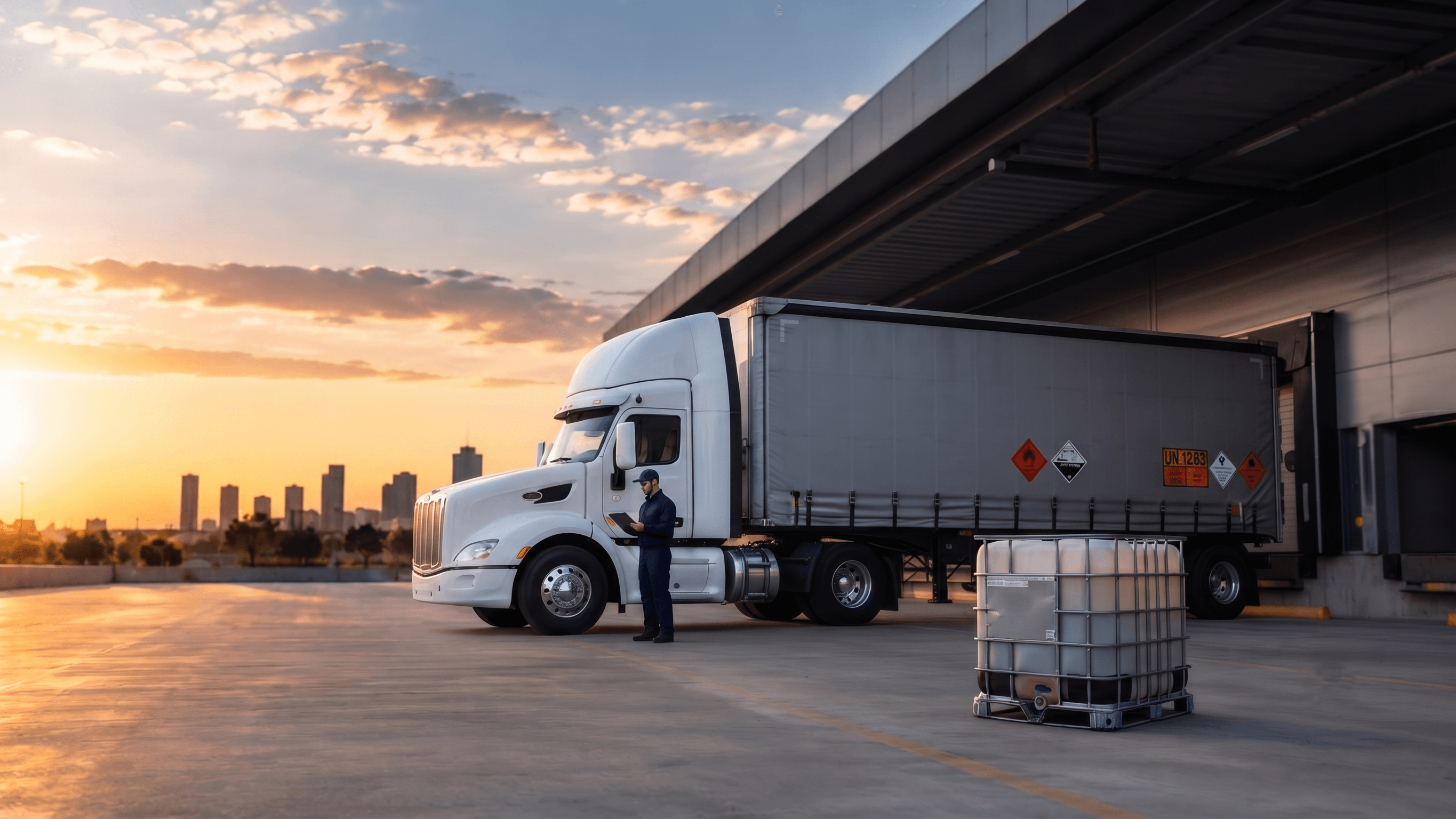
WHY CHOOSE SOLDRIFT FOR DANGEROUS GOODS TRANSPORT?
Businesses, small, medium, and large, choose Soldrift to transport their dangerous goods across Australia. With our expertise and adherence to the Australian Dangerous Goods Code, clients trust us to deliver their hazardous materials safely and securely. We strictly follow the ADGC and have trained teams that have years of experience in handling all classified dangerous goods types.

Quick Collection
Highly-Rated

Detailed-tracking

Affordable Services
Still Not Sure?
Want to See How It
Works?
Check out our Process Video