
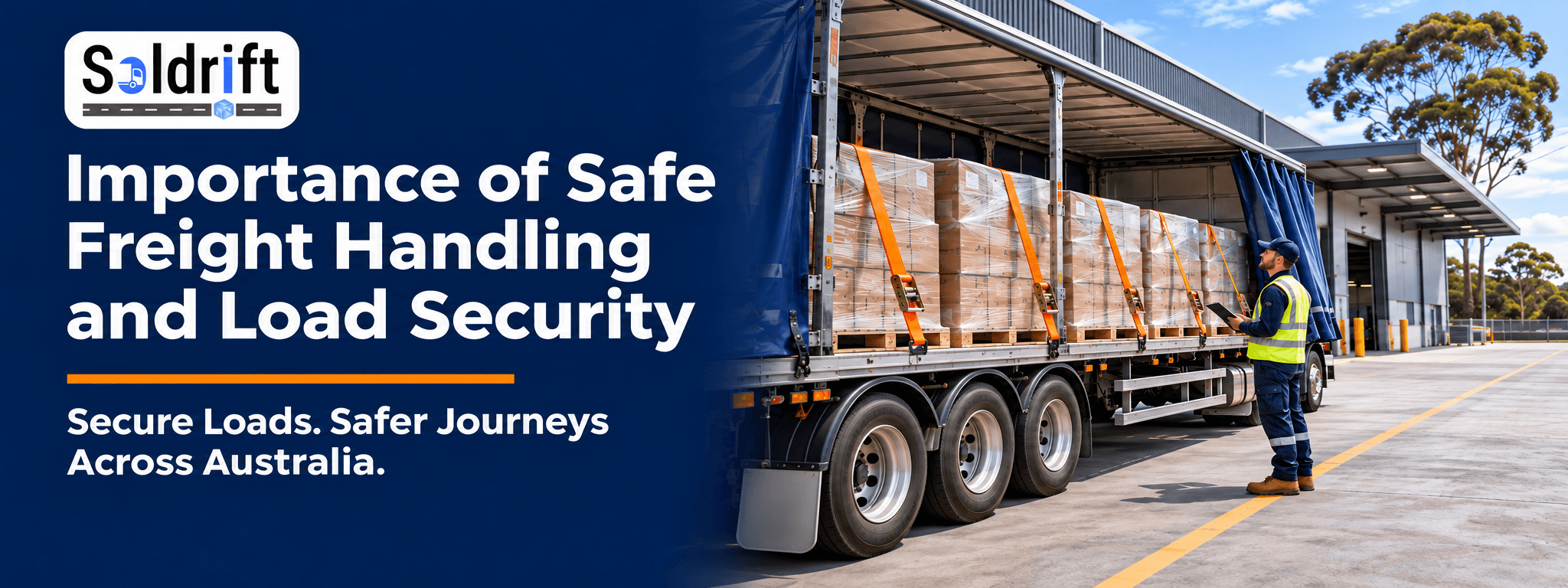
Importance of Safe Freight Handling and Load Security
Safe freight handling and load security are a core part of transport and logistics workflow. The whole ecosystem of your supply chain is responsible for ensuring the safety of the freight. From the right categorisation of the freight and its proper packaging to safe loading and unloading, all those involved share an equal responsibility to keep the freight safe during storage, transit, and delivery.
Freight safety becomes more important when high-value, temperature-sensitive, fragile, and dangerous goods are at stake. Unsafe freight transit can not only cause losses due to damaged goods, but it can also lead to penalties.
In this article, Soldrift’s experts discuss the importance of safe freight handling and load security from the perspective of Australia’s transport and logistics industry.
Chain of Responsibility for Safe Freight Handling & Load Security
As each such touchpoint carries its own responsibility, it is a shared duty under the Chain of Responsibility (CoR).
The key people (stakeholders) involved in ensuring freight safety are:
-
 Consignors
-
 Warehouse Staff
-
 Packaging Staff
-
 Loading Managers
-
 Drivers
-
 Consignees
-
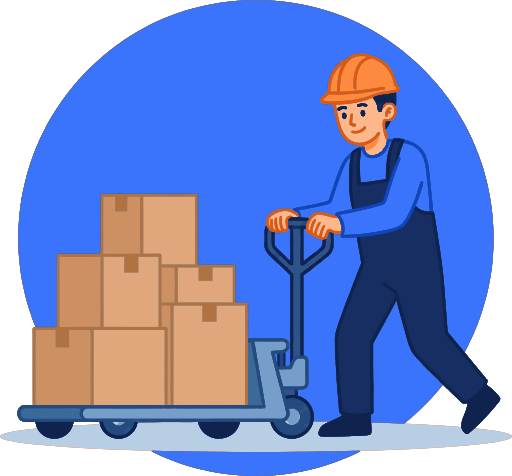 Labour Staff
-
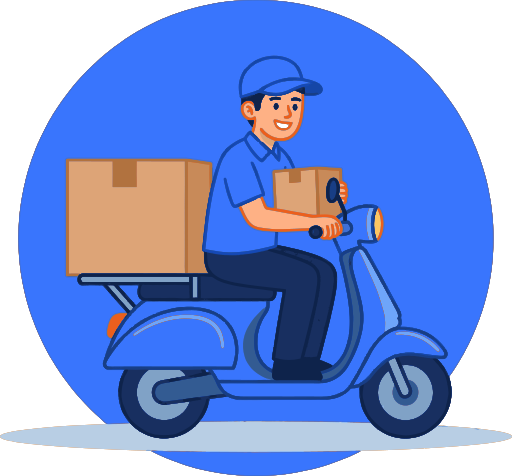 Delivery Staff
All have a primary duty to keep their freight activities safe, secure, and in compliance with the Australian freight safety laws.
What Aspects are Covered Under Safe Freight Handling and Load Safety?
Safe freight handling covers every aspect where the freight is picked up, stored, packaged, loaded into the delivery vehicle, and unloaded at the delivery point.
Let’s look at each stage of freight handling:
1. Pick-Up Safety
Most of the damaged goods cases start at this stage. Here, there are two main stakeholders.
- Consignor
- Pick-up Staff
Consignor’s Obligations:
- Accurate freight details: The consignor should declare the correct type of goods, their categories, weights, dimensions, item counts, and contents (whether flammable, dangerous, fragile, etc.). On the consignment note (con-note), the consignor should also mention any special handling requirements, including the required vehicle type.
- Providing Site Access: The consignor must ensure that the pick-up vehicle and the staff can reach the pick-up site easily without restrictions. Also, if any pick-up equipment is required, the site must have proper space and load-bearing capacity for the equipment.
Pick-up Staff’s Obligations:
- Condition check: The pick-up staff or/and the driver should inspect the freight before accepting it. Check the load for leaks, tears, broken items, etc. If anything is found, the pick-up staff must get a signed consignor acceptance note regarding the same. This protects the freight services from unwanted claims later.
- Right vehicle, right equipment: Pick-up staff should ensure they bring the right vehicle and equipment to the site. Based on the consignor’s quotation and agreement, the pick-up staff must carry the proper pick-up equipment and vehicle.
- Paperwork: Documentation as required for the transit and adherence to highway authority requirements is also the pickup staff’s obligation. For instance, DG consignments need correct classification, labels, and a dangerous goods declaration under the ADG Code before they leave the consignor’s premises.
2. Storage and Warehousing Safety
While most freight assignments are pickup to delivery, some also need storage for a few days or during transit halts at warehouses, etc. Long-journey freight may also need storage. Therefore, the storage and warehousing staff must make sure that freight that is stored is safe and secure.
Store freight in the right conditions:
- Dry Storage: Freight must not be stored near damp areas or areas that can be flooded with water or leaks.
- Correct Racking & Stacking: If stored in a warehouse, freight must be stored based on its load on the rack. Heavy loads must take the lower spot. Fragile goods must also be stored on lower racks only.
- Temperature Control: Temperature-sensitive stocks need to be stored in refrigerated conditions.
- Fire Protection: Always take precautions for fire safety. Keep sufficient fire extinguishers in the storage.
- Theft Protection: Ensure that high-value goods are stored under CCTV, and also restrict access to storage rooms. Only authorized personnel should enter the room.
3. Packaging Safety
Packaging safety is key to keeping the goods secured during transit and even during storage. Packaging must be relative to the freight type. Means that fragile goods, dangerous goods, heavy items, etc. must be packaged differently.
Packaging must be able to survive:
-
 Vibrations
-
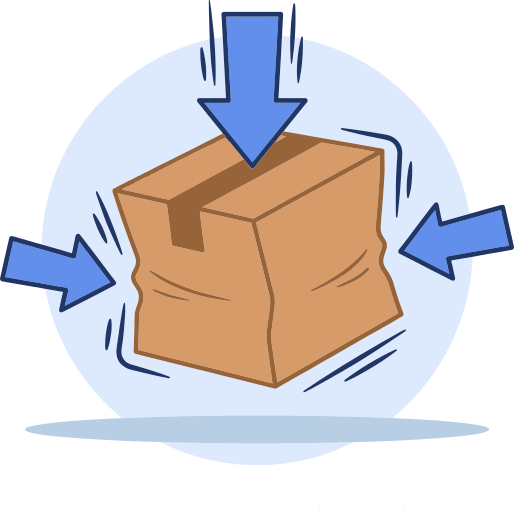 Pressure
-
 Friction
-
 Heat
-
 Water
-
 Minor Drops
-
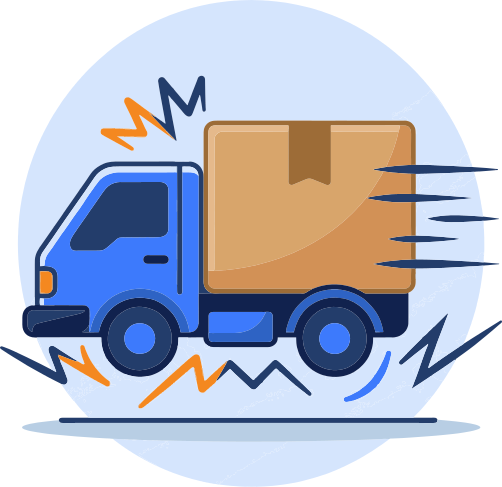 Transit Jerks
It is the responsibility of the packaging staff to keep the packaging material in stock, including cartons, bubble wrap, foam, timber crates, etc. Packaging staff must also generate barcodes and labels as required for marking. Instructions such as ‘Fragile ’, ’ Top load only ’, or 'This Way Up’ must be clearly labeled.
4. Loading Safety
Loading the freight into the vehicle properly is important for maintaining transit safety. How you load and place the freight inside the vehicle will determine what happens during braking or bumper impacts. The responsibility lies with the loading staff. They must follow the SOPs and best practices for loading freight.
Below are some standard loading practices:
- Spread the load evenly in the vehicle.
- Strap and angle it properly to reduce rollover risks.
- Use only rated straps, chains, blocking, anti-slip mats, and edge protectors.
- Follow the load limits regulated by the Heavy Vehicle National Law (HVNL).
- All limits related to weight, height, or width must be followed strictly.
Follow the load restraint system as notified by the National Heavy Vehicle Regulator (NHVR)

Incompatible dangerous goods classes must be kept apart inside the vehicle. The vehicle must also be placarded where required. Use forklifts, pallet jacks and tailgates instead of manual lifting wherever possible.
5. In-Transit Load Security
When trucks leave the loading site, the next chain of responsibility stakeholder is now the driver.
The driver must drive responsibly and also follow the practices below:
- Restraint checks: Drivers should recheck straps and chains at regular intervals and at stops.
- Smooth driving: Drivers must avoid harsh and sudden braking. Must follow speed limits.
- Temperature monitoring: Refrigerated loads need continuous monitoring, so drivers must check the temperature at regular intervals. (log book)
6. Unloading at the Delivery Point
Once the freight vehicle reaches the delivery point, it is the responsibility of the driver and the unloading staff present at the delivery site to ensure safe unloading. From opening straps with precaution to final checks/inspection of freight, the unloading activity is the last leg of freight safety.
While unloading, follow the practices below:
- Check before releasing restraints and inspect the load before releasing straps.
- Use the right equipment that is required for unloading (Tailgate lifts, cranes, side loaders, etc.)
- Always check the site before unloading. The site must be conducive to unloading.
- Once unloaded, the driver or unloading staff must take images and get the sign of the customer for proof of delivery.
Significance of Safe Freight Handling and Load Security
Safe freight handling and load security combine a set of practices and procedures that ensure end-to-end safe freight services. From pickup, loading, and packing to palletising, storage, transit, and unloading at the delivery point, safe freight handling is a critical freight workflow. Load security, or load restraint, is also an integral freight requirement. It is crucial to ensure freight stability inside the vehicle.
Here are the key costs of poor load security:
Poor freight handling and load security cost much more than a damaged carton. The losses can be financial, legal, and reputational.
- As per the NTARC Major Incident Investigation Report 2025 , the average claim cost of a major heavy vehicle incident is $139,820.
- As per the NHVR penalty schedule , a Category 1 primary duty offence can attract a fine of up to $4,230,550 for a corporation.
How Should Different Types of Freight Be Handled?
Below is a quick guide to handling different freight types:
| Freight Type | Segment | Safe Handling Practices |
|---|---|---|
| High-Value Goods | Electronics, solar inverters, batteries, pharmaceuticals, machinery parts |
|
| Fragile Goods | Glassware, tiles, benchtops, furniture, display screens, medical devices |
|
| Dangerous Goods | Lithium batteries, aerosols, paints, gas cylinders, fuels, chemicals |
|
| Temperature-Sensitive Freight | Fresh produce, meat, dairy, seafood, vaccines, medicines |
|
| Pallets, Heavy Freight & Containers | Palletised stock, machinery, 20 ft and 40 ft containers |
|
Keep Your Freight Safe From Pickup to Delivery: Soldrift
Soldrift follows strict SOPs and best practices at every stage of freight handling, from pickup to final delivery. Our team of 50+ staff has 5+ years of hands-on experience in Australia's transport and logistics industry. When you leave your goods with us, we treat them as our own.
Our General Freight Services handle everyday freight, from small consignments to Full Truck Load (FTL) and Less-Than-Truckload (LTL) shipments. Only highly trained staff, drivers, and packers work with Soldrift. We carry dangerous goods with full protocol adherence.
Whether you are a large business moving freight interstate, a small company shipping stock across Australia, an e-commerce seller, or an individual with a one-off consignment, Soldrift is your reliable freight partner for safe freight handling and load security.
Looking for safe and reliable freight services in Australia? Get in touch with Soldrift for a quote. Call +61 7 2104 1161 or email bookings@soldrift.com.au.

Jade Williams
CEO & COO at Soldrift
Leading our team with a focus on growth and operational excellence.